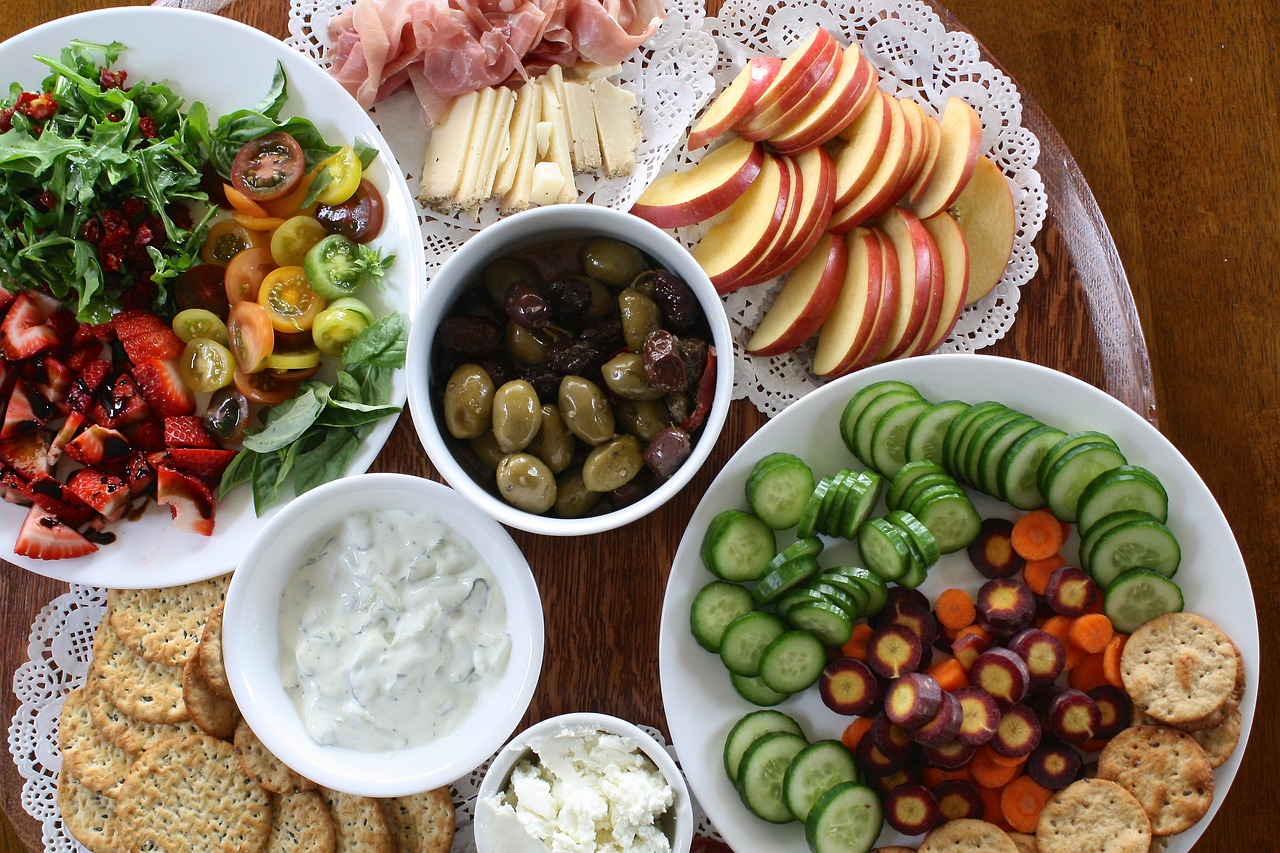
Meal planning for men over 35 is a vital issue for overall well-being. The time when we become 35 is a crucial one for the demands of career, family, and personal goals. Effective meal planning is not just a tool for organizing meals; it’s a strategy to maintain our physical and overall well-being.
In this article, we will focus on the importance and benefits of good meal planning, meal plans personalized for the needs of men over 35 as well as tips for creating balanced meals, and maintainable choices that don’t compromise on taste or convenience. Last but not the least, you get the chance to challenge yourself to a week of planned meal and the reward, is a new and stronger you!
Table of Contents
Why Meal Planning Matters for Men Over 35
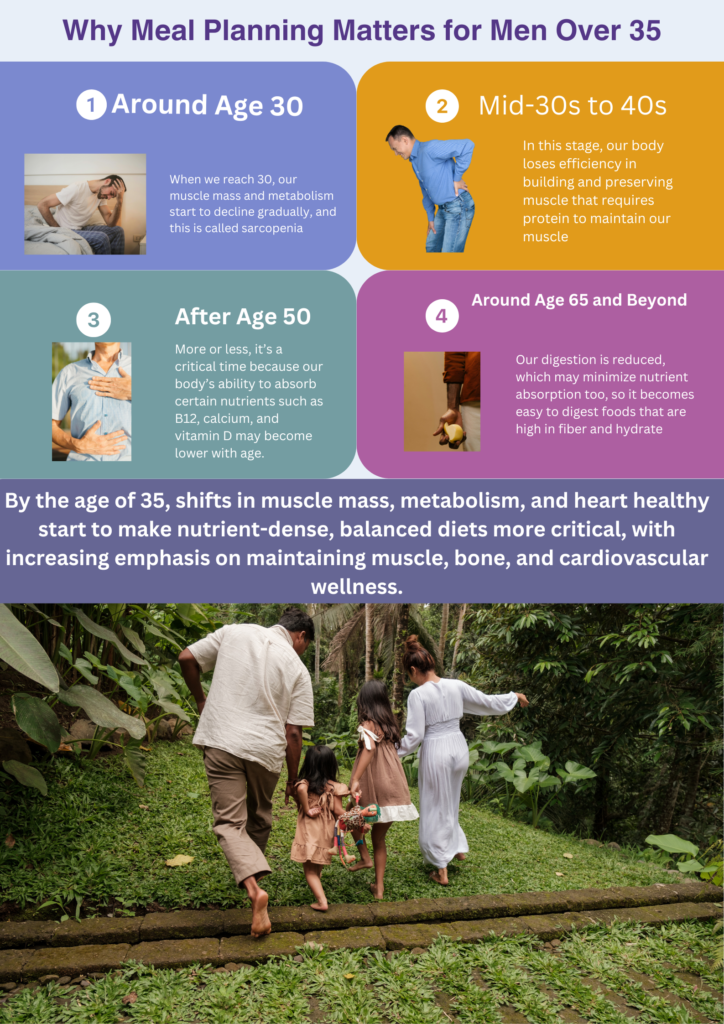
When men enter their 30s, their requirements for nutrition shift and this shift becomes more prominent by age 35. Our nutritional requirements continues shifting throughout the ages of 30 to 65. Here is a brief insight on how dietary requirements change with age and why:
Around Age 30:
- Muscle Mass and Metabolism: Around the age of 30, muscle mass and metabolism begin to gradually decline, a process known as sarcopenia. Metabolism because muscle tissue burns more calories at rest than fat tissue does. Thus, losing muscle results in lesser calorie burnt.
- Caloric Needs: With a slower metabolism, men need to increase intake of nutrient-dense foods, adjusting caloric and decreasing it slightly if necessary in order to maintain optimal health and energy levels.
Mid-30s to 40s:
- Protein: In this stage, our body loses efficiency in building and preserving muscles. For this reason, we require more protein to maintain our muscles.
- Bone Health: As our bone density decreases, nutrients such as calcium and vitamin D which are vital for bone health are extremely helpful.
- Heart Health: Nowadays, it is a common case for cholesterol and blood pressure levels shift. It is important to eat antioxidants, healthy fats, and diet rich in fiber to reduce these shifts and keep our hearts healthy.
After Age 50:
- Increased Risk of Nutrient Deficiencies: This is a critical period because our body’s ability to absorb certain nutrients such as B12, calcium, and vitamin D may decrease. Regularly monitoring our nutrient levels and optimizing a diet with B12, calcium, and vitamin D-rich foods while also considering supplements will help overcome this situation.
- Lower Caloric Needs: Decreasing caloric intake helps us to continue our required activities.
Around Age 65 and Beyond:
- Digestive Health: During this time our digestion is reduced, which may minimize nutrient absorption as well. For this reason foods that are high in fiber is easier to digest. Proper hydration is also very important.
- Immune Function: To maintain our immune health, which can decline with age, nutrients like vitamin C, zinc, and protein are essential.
By the age of 35, shifts in muscle mass, metabolism, and heart health start to make nutrient-dense, balanced diets more important, with increasing emphasis on maintaining muscle, bone, and cardiovascular health.
Testimonial: “When I became 36, I noticed a significant change in my energy. It became a struggle to balance work, fitness and family due to physical issues. that is when I got some advice from one of my friends, who works in a gym as a fitness instructor. He instructed me to make a meal plan. I started to plan my meals by planning and got amazing results just within 4 weeks. I felt a evident boost in energy, my stress was also reduced a lot. Even my blood pressure was improved! That is the reason I felt the need to make this article and spread the magic of meal planning for men over 35.
Pro Tip: For staying motivated, set a particular health and fitness goal. You could set a daily protein or fiber intake target or aim to manage your weight.
Key Nutritional Needs for Men Over 35
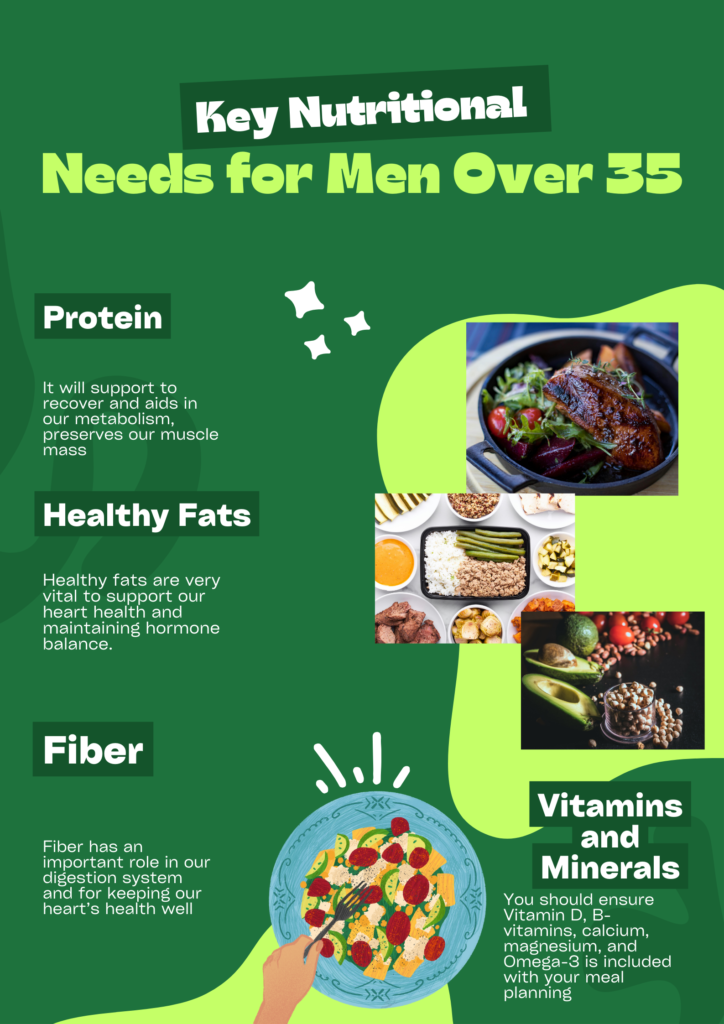
For creating an effective meal plan, we have to understand the core nutrients essential. Here’s a breakdown of essential nutrients and where to find them:
1. Protein
- Importance: It helps preserve muscle mass, supports muscle recovery and aids in metabolism.
- Sources: Nutrient foods such as fish, eggs, Greek yogurt, lean meats (chicken, turkey), and nuts can help us to ensure our protein necessity.
2. Healthy Fats
- Importance: Healthy fats are vital for heart health and hormonal balance.
- Sources: You can find healthy fats from olive oil, avocados, fatty fish (salmon, sardines), nuts, seeds etc.
3. Complex Carbohydrates
- Importance: It has the ability to provide us sustained energy without blood sugar spikes.
- Sources: Foods such as whole grains (quinoa, oats, brown rice), sweet potatoes, and vegetables are vital sources of complex carbs.
4. Fiber
- Importance: Fiber has an important role in our digestion system and for keeping our heart’s health well.
- Sources: Food like fruits, vegetables, legumes, and whole grains provide fiber.
5. Vitamins and Minerals
- Focus Nutrients: You should ensure Vitamin D, B, Calcium, Magnesium, and Omega-3 is included in your meal plan.
- Sources: Leafy greens, dairy or fortified alternatives, fish, and whole grains play an important role to ensure the above nutrients.
Pro Tip: Decorate your plate with a variety of colorful foods to ensure coverage of a wide range of nutrients.
Designing a Weekly Meal Plan
At first, weekly meal planning may feel overwhelming, but with time you will grow used to it. Following foolproof tactics and step-by-step strategies, you can create a meal plan that will fit right into your busy lifestyle:
Step 1: Determine Your Daily Caloric Needs
- You have to find your total daily energy expenditure (TDEE) to make a meal plan. You can use online calculators to find your TDEE based on age, weight, activity level, and fitness goals.
Step 2: Divide Your Macronutrients
- Assign your daily calories into protein, fats, and carbohydrates according to your goals, whether it is for building muscle, maintaining weight, or losing fat.
Step 3: Choose Your Meals for Each Day
- Breakfast: For breakfast, aim for a balanced meal by including protein and complex carbs (e.g., eggs with whole-grain toast)
- Lunch: Lean protein with complex carbs and vegetables will be the perfect choice for planning your lunch meal. (e.g., grilled chicken with quinoa and steamed vegetables).
- Snacks: You have to choose light foods with protein and fiber-rich snacks such as Greek yogurt, nuts, or fruit to replenish your energy.
- Dinner: Your dinner must be a lighter meal focused on protein and veggies.
Step 4: Schedule Time for Meal Prep
- Dedicate one or two days per week to prepare your meal plan in advance to avoid last-minute unhealthy choices.
Pro Tip: Consider prepping main ingredients (like grilled chicken, roasted vegetables, and cooked grains) to mix and match throughout the week.
Quick and Nutritious Meal Ideas for Men Over 35
Planning your meal with a variety will keep you interested, giving to enough motivation to experience essential nutrients. Here are a few easy nutrient-dense 7 days meal plan ideas to achieve common goals:
Goal: Increase Energy Levels
- Breakfast: Try to keep Greek yogurt parfait with mixed berries, chia seeds, and a handful of nuts in your breakfast for better results.
- Lunch: It’s lunchtime to boost energy with grilled chicken and avocado salad with a quinoa base and a drizzle of olive oil.
- Snack: Boost your energy in snack time with light foods like a banana with almond butter or a small handful of trail mix.
- Dinner: You may eat baked salmon with sweet potato and steamed asparagus.
Goal: Build Lean Muscle
- Breakfast: When building muscle, make your breakfast with a protein smoothie with spinach, banana, protein powder, and almond milk.
- Lunch: Turkey and veggie wrap with hummus on a whole-grain tortilla in your lunch to enhance your muscles and energy.
- Snack: Between two heavy meals, a snack is a time to gain some energy. It can be cottage cheese with pineapple or Greek yogurt and a spoonful of peanut butter.
- Dinner: Your meal should be light and proper for better sleep. Make your meal with beef stir-fry and a variety of vegetables served over brown rice.
Goal: Maintain Heart Health
- Breakfast: In the question of your heart’s health, oatmeal topped with blueberries, flaxseeds, and walnuts will be the effective food at breakfast to keep it healthy.
- Lunch: Make a meal plan with Lentil soup with mixed greens and a whole-grain roll to keep your heart healthier.
- Snack: Don’t make your snack heavy; take a small apple with a handful of almonds.
- Dinner: End your day with a well-planned meal of grilled trout, roasted Brussels sprouts, and a small baked potato.
Pro Tip: Prepare heart-healthy meals even during the busiest days.

Meal Planning Tools and Apps
In the modern-day world, we all live busy lives, and maintaining everything, particularly our health care, becomes difficult. In that case, to keep your meal planning perfect, you may take assistance from some tools and apps:
- MyFitnessPal: This is a smartphone app and website that tracks caloric intake, logs meals, and monitors macronutrient distribution.
- Mealime: This app will assist us in managing our healthy eating basis by personalizing our meal plans, delicious recipes, and smart grocery lists for easy-to-follow.
- Paprika Recipe Manager: This app also makes meal planning easy by organizing recipes, meal planning, and creating grocery lists.
- Plan to Eat: Helps save recipes and plan meals, featuring a drag-and-drop interface.
Pro Tip: Explore these tools to organize your specific meal-planning style and diet that is best for your overall health.
Overcoming Common Meal Planning Challenges
1. Lack of Time
- Solution: Due to our business, daily meal planning may be a challenge. Try batch-cooking on weekends and freezing meals for quick options.
2. Limited Cooking Skills
- Solution: Focus on simple recipes that require few ingredients. You can use pre-chopped vegetables and rely on one-pan meals or sheet-pan dinners.
3. Eating Out and Social Events
- Solution: During meal planning, it’s recommended to choose menu items that align with your nutritional goals, such as lean proteins and vegetables. When attending social gatherings, eat a light snack before going to control your overeating.
4. Cravings and Emotional Eating
- Solution: Don’t emphasize meals only to satisfy your taste; ensure that necessary healthy fats and proteins are included. Find more nutritious alternatives to your hunger instead of denying yourself satisfaction.
Pro Tip: Make your meal planning not rigid; allow it for adjustment and treat days.
7-Day Meal Plan Challenge for Men Over 35
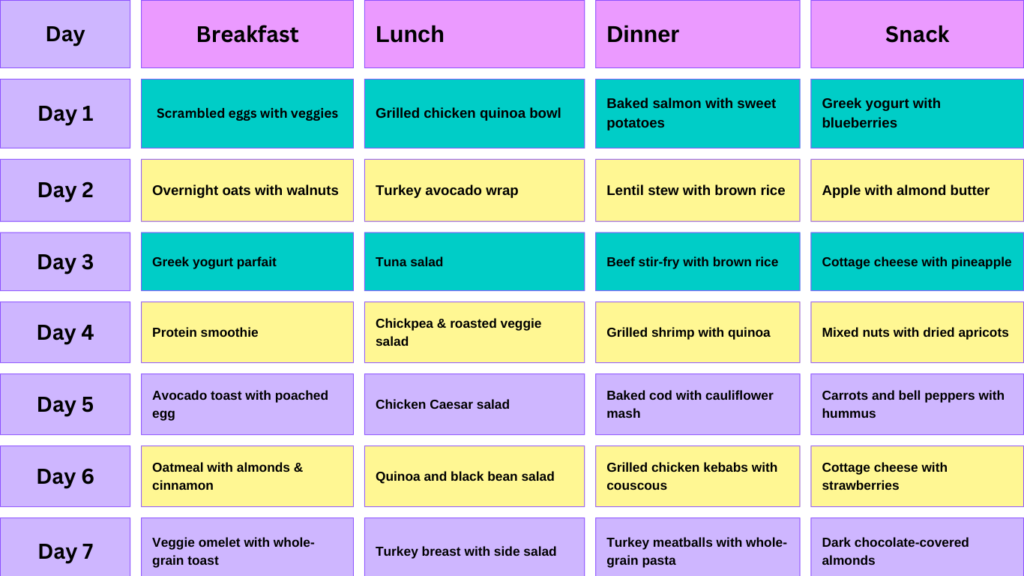
Are you ready to start your journey for a better meal plan? In this section, we are sharing a structured 7-day meal plan for those over 35, especially for men who are looking to boost energy, maintain muscle, improving overall health. This meal plan includes breakfast, lunch, dinner, and snacks, with simple recipes that will be easy to prepare.
Day 1
- Breakfast: Start your first hour of the first day with scrambled eggs with spinach, cherry tomatoes, and a slice of whole-grain toast
- Tip: It will be better to add a sprinkle of feta cheese for flavor and extra protein.
- Lunch: Now, it’s time to charge your body for lunch fully. Include a grilled chicken and quinoa bowl with mixed greens, cucumber, bell peppers, and a drizzle of olive oil vinaigrette in your lunch meal plan.
- Snack: Avoid fasting for a long time. During the gaps, eat Greek yogurt, a small handful of blueberries, paired with a dash of chia seeds to to keep your body energetic and ready to move on.
- Dinner: For the best peaceful night, prepare baked salmon with roasted sweet potatoes and steamed asparagus for dinner.
- Pro Tip: Include season salmon with lemon, garlic, and herbs for extra flavor to make it tasty.
Day 2
- Breakfast: That was a great start! You can begin your second day with overnight oats, almond milk, chia seeds, sliced banana, and a handful of walnuts to get proper nutrients.
- Tip: Prepare this the night before for a quick, ready-to-go breakfast.
- Lunch: Make your second day’s lunch a bit different with a turkey and avocado wrap, whole-grain tortilla, mixed greens, and a side of sliced carrots and hummus.
- Snack: It will be better to take apple slices with almond butter for your second day’s snack .
- Dinner: Enjoy a hearty lentil and vegetable stew packed with diced tomatoes, tender carrots, crisp celery, and fresh spinach, all simmered to perfection. A side of nutty brown rice accompanies this wholesome dish for a satisfying meal.
- Tip: This stew can be batch-cooked and frozen for future meals.
Day 3
- Breakfast: You did well up to the second day. Now it’s time to start your third day. Make your meal plans different from the previous days. Try a Greek yogurt parfait with mixed berries, a sprinkle of granola, and sliced almonds.
- Tip: For better health, you may choose a low-sugar granola to avoid extra calories from added sugars.
- Lunch: Proper lunch meal planning can make you more energetic. On the third day, make a tuna salad with mixed greens, cherry tomatoes, cucumbers, olives, and lemon dressing.
- Tip: Using Greek yogurt instead of mayonnaise for a lighter dressing will be a better experience.
- Snack: Cottage cheese with pineapple chunks will be a great snack for the third day.
- Dinner: You can choose beef stir-fry with bell peppers, broccoli, and snap peas, served over a small portion of brown rice.
- Tip: Opt for lean beef or substitute with tofu for a lower-fat version.
Day 4
- Breakfast: Excellent! You just reached the middle of the week. A protein smoothie with spinach, frozen berries, banana, a scoop of protein powder, and almond milk will delight you all day.
- Tip: Adding flaxseed or chia seeds for extra fiber will be more helpful for your health.
- Lunch: Leave your work behind and take your lunch with chickpea and roasted vegetable salad with zucchini, red peppers, and cherry tomatoes, topped with crumbled feta and balsamic dressing.
- Snack: During snack time, you can take mixed nuts and a few dried apricots.
- Dinner: You’re nearly finished with your fourth day’s meal planning. It’s recommended that you have a side of quinoa with grilled shrimp and roasted Brussels sprouts.
- Tip: To make it delightful, marinate the shrimp in garlic, lemon juice, and herbs for extra flavor.
Day 5
- Breakfast: You’ve done great work the previous four days. Start your fifth day with avocado toast on whole-grain bread, a poached egg, and a sprinkle of pumpkin seeds.
- Lunch: Make your lunch plan with chicken Caesar salad, including romaine lettuce, grilled chicken breast (grilled chicken breast may be a better option), a sprinkle of Parmesan, and light Caesar dressing.
- Tip: Make your dressing using Greek yogurt for a healthier twist.
- Snack: Make sure to catch your snack time with baby carrots and bell pepper slices with hummus.
- Dinner: You have several hours to fall into a peaceful sleep. Choose baked cod with a side of mashed cauliflower and steamed green beans to sleep overnight with sweet dreams.
- Tip: Season cod with garlic, paprika, and a dash of olive oil before baking.
Day 6
- Breakfast: Amazing! You are now on your sixth day. Make your breakfast with oatmeal, a handful of blueberries, sliced almonds, and a dash of cinnamon.
- Tip: Add a scoop of protein powder after cooking for a protein boost.
- Lunch: Try quinoa and black bean salad with cherry tomatoes, corn, diced red onion, cilantro, and a squeeze of lime that will make you happier to enjoy your meal.
- Tip: Serve with a small portion of sliced avocado for extra healthy fats.
- Snack: Cottage cheese with a handful of fresh strawberries
- Dinner: For dinner, it’s recommended to have grilled chicken kebabs with bell peppers, zucchini, and red onion, served with a side of couscous.
- Tip: To make your meal delicious, marinate chicken with olive oil, garlic, and lemon juice for extra flavor.
Day 7
- Breakfast: If you made it to the last day then congrats! But its not over yet! It’s time to start your seventh day with a veggie omelet with mushrooms, bell peppers, a sprinkle of cheese onions, and a side of whole-grain toast.
- Tip: Use egg whites for part of the omelet to reduce fat while keeping protein high.
- Lunch: We recommend keeping sliced turkey breast with a side salad (mixed greens, cherry tomatoes, cucumbers), a slice of whole-grain bread, and a dollop of hummus
- Tip: Add avocado slices for extra creaminess and healthy fats in your last day’s lunch.
- Snack: You can take a small handful of dark chocolate-covered almonds
- Dinner: On the last day, you may choose turkey meatballs with a side of whole-grain pasta and marinara sauce, crowned with vibrant fresh basil and a delicate sprinkle of Parmesan.
- Tip: To reduce fat content, use lean ground turkey and bake the meatballs.
Advice: Following the same routine is optional, but it is important to eat foods with appropriate vitamins, proteins, minerals, healthy fats, etc.
Pro Tips for Success:
- Designate a Meal Prep Day: Pick a day each week, like Sunday, to prepare ingredients in bulk. You can cook quinoa, chop vegetables, or grill chicken, making it easier to whip up meals throughout the week.
- Substitute Ingredients: Feel free to adjust ingredients based on what you have or your tastes. For instance, you can swap quinoa for brown rice or use tilapia in place of cod.
- Keep Hydrated: In addition to following your meal plan, aim to drink plenty of water during the day to help with digestion and maintain your energy levels.
This 7-day meal plan is crafted to provide a balanced mix of protein, fats, and fiber, specifically designed for men over 35 looking to reach their health and fitness goals while enjoying diverse and delicious meals. Feel free to make adjustments for flexibility, but sticking to these balanced choices will lead to long-lasting results.
Meal planning as a man over 35 can significantly enhance your health journey, helping you fuel your body effectively, lower health risks, and maintain top performance in every aspect of your life. We tried to make practical strategies and tips to make personalized meal planning both attainable and enjoyable. Keep in mind that it’s about consistency; instead, it is perfect; even small changes can lead to impressive improvements over time. Here’s to better health and the vitality to seize each day!