In the hustle and bustle of modern life, finding balance through a calming and effective workout is essential. Tai Chi, a centuries-old Chinese practice, offers a unique way to achieve mental and physical harmony. This ancient martial art is renowned for its low-impact movements, making it a perfect workout for beginners at home. Thus, in this article we will explore Tai Chi for beginners at home. In this guide, we’ll explore the basics of Tai Chi workout for beginners, its origins and how to practice it at home.
Table of Contents
What is Tai Chi?
Tai Chi is a unique form of exercise often described as “meditation in motion.” It involves slow and gentle movements that help you relax while focusing on your breath and clearing your mind. Unlike many martial arts that focus on energetic movements, Tai Chi is all about building internal strength and finding balance within yourself. If you’re looking for a peaceful way to stay active and boost your well-being, Tai Chi could be just what you need.
Recently, practicing Tai Chi at home has become popular, especially for those who are new to it. This low-impact practice is great for improving flexibility, lowering stress, and enhancing balance. The best part is that It’s suitable for people of any age or fitness level!
The Origins of Tai Chi
Tai Chi originated in ancient China and started as both a martial art and a method for healing. A popular story says that a Taoist monk named Zhang Sanfeng created Tai Chi. A fateful encounter with a battle between a crane and a snake inspired him to develop movements that mimic nature and promote harmony which eventually evolved into a full-fledged routine called Tai Chi.
Today, Tai Chi is cherished not just for its martial applications but also for its ability to enhance mental and physical health, making it a people’s favorite around the world. The most well-known styles include Yang, Chen and Wu, each offering its own unique approach and benefits.
The Yang style is the most widely practiced form. It is known for its slow, gentle movements, making it perfect for beginners. Today, Tai Chi is practiced worldwide, and in the U.S., it’s gaining traction as an effective home workout for reducing stress and enhancing physical well-being.
Recent influence on Tai Chi Around the World
Tai Chi gained popularity globally due to its numerous health benefits and calming practices. Here’s a peek at how Tai Chi is being practiced and researched in different countries:
1. United States
In the U.S., Tai Chi has become a widely recognized form of exercise, especially among older adults. Numerous studies highlight its benefits for balance and reducing the risk of falls. For instance, a study published in the New England Journal of Medicine found that Tai Chi significantly improved balance and reduced the risk of falls in elderly participants. Organizations like the Arthritis Foundation promote Tai Chi as a safe way to manage arthritis symptoms and improve overall mobility.
2. United Kingdom
Tai Chi is also gaining traction in the U.K. A comprehensive review published in the British Journal of Sports Medicine noted that Tai Chi can enhance physical function and mental health in older adults. Community classes and health programs often include Tai Chi, focusing on its potential to improve mental clarity and reduce stress. The National Health Service (NHS) encourages Tai Chi as part of its holistic approach to health and wellness.
3. Australia
In Australia, Tai Chi has been embraced for its health benefits. Research from the Australian Journal of Physiotherapy demonstrated that practicing Tai Chi improved strength, flexibility, and balance among older adults. Many local councils offer Tai Chi classes in parks, promoting outdoor exercise as a means to improve community health and well-being.
4. Canada
Tai Chi is recognized in Canada as an effective form of physical activity. A study in the Canadian Journal of Public Health showed that Tai Chi can help improve cardiovascular health and reduce stress levels. Canadian universities also offer courses on Tai Chi as part of their physical education programs, highlighting its role in promoting overall wellness.
5. China
In its country of origin, Tai Chi remains a deeply respected practice. Research in China continues to explore its health benefits, including its impact on chronic diseases. A study published in Chinese Medicine highlighted Tai Chi’s effectiveness in managing hypertension and diabetes. In urban areas, you can often find people practicing Tai Chi in parks at sunrise, reflecting its cultural significance.
6. Singapore
Tai Chi is part of Singapore’s initiative to encourage healthy living among its citizens. The government promotes Tai Chi through community programs, especially targeting seniors. Research published in Health Promotion International found that regular Tai Chi practice helped improve mental well-being and physical function among older adults in Singapore.
Why Practice Tai Chi?
Practicing Tai Chi at home allows you to create a comfortable, personalized environment for your sessions. You can decide the pace, choose your routine, and establish a calming space without distractions. Here are some key benefits of doing Tai Chi at home:
1. Improves Balance and Reduces Fall Risk
Tai Chi is well-known for enhancing balance and coordination. This is particularly beneficial for older adults who are at a higher risk of falling. According to Harvard Medical School, practicing Tai Chi regularly can strengthen the muscles in your legs, improve your posture, and help prevent falls.
2. Increases Flexibility and Joint Mobility
The slow, controlled movements of Tai Chi gently stretch and rotate the joints, which helps increase flexibility. This is especially helpful for people with conditions like arthritis, as it can improve joint mobility without putting too much strain on the body.
3. Boosts Mental Health
Research published in The Journal of Aging and Physical Activity found that Tai Chi can improve mental clarity and focus. It’s also been shown to reduce symptoms of anxiety and depression. The mindful, meditative aspect of Tai Chi helps calm the mind, making it a great way to manage stress.
4. Supports Cardiovascular Health
Even though Tai Chi is a low-impact exercise, it can still get your heart working and improve blood circulation. Regular practice may contribute to better heart health by helping to lower blood pressure and promote overall cardiovascular function, making it a safe choice for those with heart concerns.
5. Encourages Better Sleep
Practicing Tai Chi can have a relaxing effect that makes it easier to wind down and fall asleep at night. Engaging in these gentle movements before bed can also help reduce insomnia, leading to more restful and uninterrupted sleep.
6. Convenience and Flexibility
Doing Tai Chi at home means you can practice whenever it fits your schedule. There’s no need to travel or stick to a class timetable. You can include a session in the morning for a peaceful start or in the evening to unwind.
7. Customizable Practice Environment
Having your own space to practice gives you the freedom to set up an atmosphere that suits you. Whether it’s playing soothing music, lighting a candle, or practicing outdoors, you can create an environment that enhances your experience and helps you stay committed.
8. Suitable for All Ages and Abilities
Tai Chi is gentle and adaptable, making it suitable for people of all ages and fitness levels. Whether you’re just starting out or have been practicing for years, you can modify the movements to match your abilities and goals.
Practicing Tai Chi at home isn’t just about convenience; it’s a comprehensive way to support both your physical and mental health. By setting up your own space, you can create a practice that’s effective, enjoyable, and uniquely yours.
Types of Tai Chi for Beginners
Tai Chi offers a variety of styles, each with its own flair and approach. Are you’re seeking relaxation or a physical challenge? Worry not! Because there is a Tai Chi style for beginners. Here’s a look at some of them:
Yang Style
The most popular style of Tai Chi is the Yang style. It features large, slow movements that promote relaxation and calmness. Because of its gentle nature, it’s perfect for folks of all ages, making it an excellent choice for beginners.
Chen Style
The oldest form of Tai Chi, Chen Style combines slow, flowing motions with quicker, more powerful ones. It often requires lower stances, making it a bit more challenging and a great workout for those looking for something slightly more vigorous.
Wu Style
Wu Style is distinguished by its smaller, compact movements and a higher stance. It focuses on weight shifting and balance, which makes it accessible for many people, especially those new to Tai Chi.
Sun Style
This style is a bit newer and combines elements from other martial arts with Tai Chi. It features lively footwork and smooth transitions, adding a dynamic quality that many practitioners enjoy.
Hao Style
Hao style is the least explored style of Tai Chi. It emphasizes internal energy and careful movements, focusing on precision and technique, which can be rewarding for those wanting to deepen their practice as well as those who wish to take the path less taken.
Each of these styles offers something unique, allowing practitioners to choose the one that resonates with them the most.
Which Tai Chi style is perfect for Beginners?
While all the styles have a common origin, each Tai Chi style focuses on improving a specific skill. Here’s a brief list of skills each Tai Chi style mentioned above helps improve.
- Calmness and Relaxation: Yang style is perfect choice is you are seeking some calmness among the busy rush of life. It offers physical relaxation as well by releasing muscle stress.
- Slow yet vigorous: Chen style shatters the misconception that vigorous movements must be fast and furious. It enhances body control so it might take some time and effort to master completely.
- Better Balance: It can be hard to find balance in life sometimes. Perhaps practicing physical Balance with Wu style will help you refresh your mind with calmness and find balance in other aspects of life as well.
- Elegance in movement: Sun style offers smooth movements and a slow yet lively practice that might be just the thing for you!
- Precision and control: Similar to Chen style in body control, Hao style focuses more on precise execution and internal energy.
Feel free to choose any one of the styles if you are unsure of what you’re looking for. At the end of the day, it is difficult to tell exactly which style resonates you the most. So, we do recommend trying them all if possible and choose the one you’re most comfortable with.
Setting Up Your Tai Chi Space
Creating a Tai Chi space at home is simple. Choose a quiet, clutter-free area where you can move freely. Make sure your space has ample light and air circulation. If you have a garden or patio, practicing Tai Chi outdoors can enhance the calming effects by connecting you with nature.
What You’ll Need:
- Comfortable, loose-fitting clothes for unrestricted movement.
- A yoga mat or non-slip flooring to maintain balance during movements.
- Optional: Relaxing background music or nature sounds to enhance the ambiance.
- Optional: Open the window if it gives you a view of nature or put a few small indoor plants around your Tai Chi space if possible. Since Tai Chi originated from nature having better connection to nature for sure adds greater results. However, there is no reason to be disheartened if that is not possible as long as you can understand and love nature in your heart.
Step-by-Step Tai Chi Routine
Excited to start your journey of Tai Chi? Here is a simple routine for beginners:
Warm-Up: Warm up is an essential part of Tai Chi. While there are specialized warm up routines for Tai Chi, if you are a beginner, a basic warm up might be enough for you. Strech your limbs and rotate your neck and shoulders. Follow a warmup routine of your choice for better control over your body during tai Chi.
Basic Routine of Yang Style:
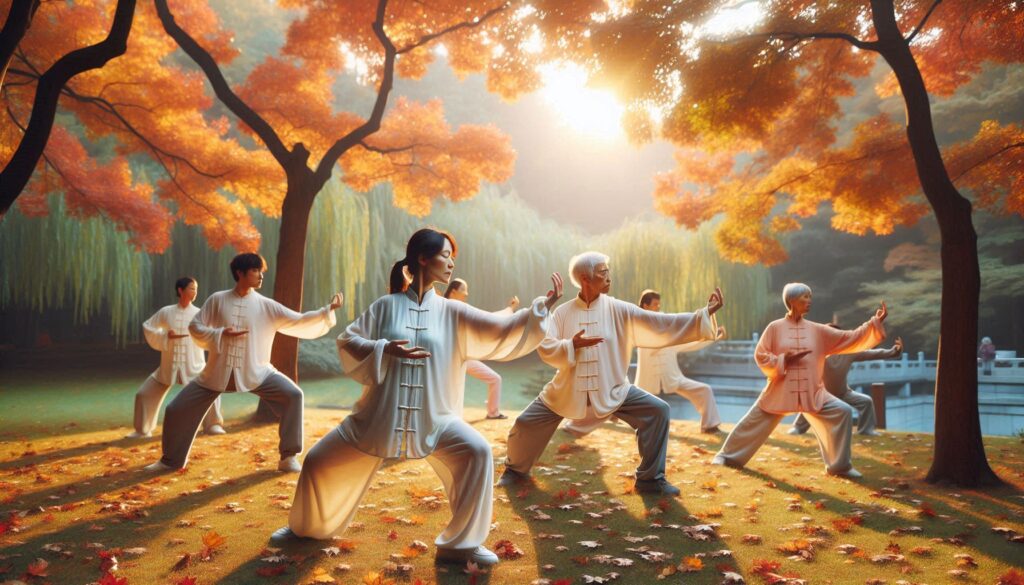
Start Position: Stand comfortably with your feet about shoulder-width apart, allowing your arms to rest naturally at your sides.
Commencing Form: Slowly raise your arms in front of you, palms facing down. Take a deep breath in, noticing how your body begins to loosen.
Parting the Horse’s Mane: Move one hand to the side, as if you’re brushing away horse hair, while shifting your weight to the opposite foot. This helps you find your balance.
Grasping the Bird’s Tail: Extend one arm forward while gently pulling it back with the other hand. Imagine you’re gently grasping a bird’s tail, flowing with the movement.Closing: Gradually lower your arms back to the starting position. Exhale softly, letting go of any tension.
Basic Routine of Chen Style:
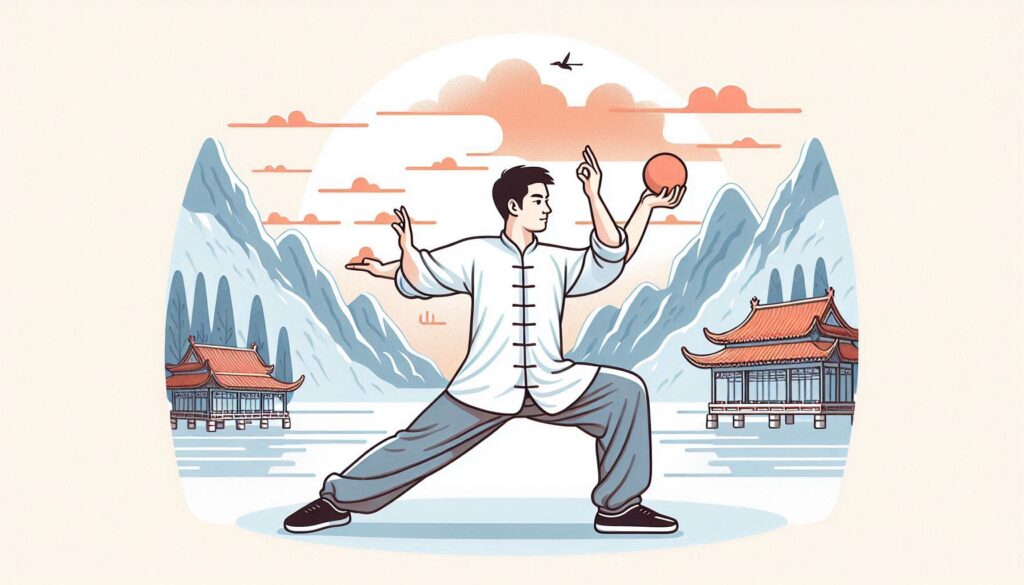
Begin with Stance: Stand tall with your feet together and take a moment to center yourself.
Five Elements: Shift your weight to one leg while raising the opposite knee slightly, placing your hands in front of you as if holding a large ball.
Cannon Fist: Gently extend your arms forward with a twist in your torso, as if launching a soft punch.
Rolling Back: Withdraw your arms while turning your body to mimic avoiding an incoming strike. Feel the flow of the movement.Finish: Return to a neutral stance and close your eyes for a few deep breaths, enjoying the calmness.
Basic Routine of Wu Style:
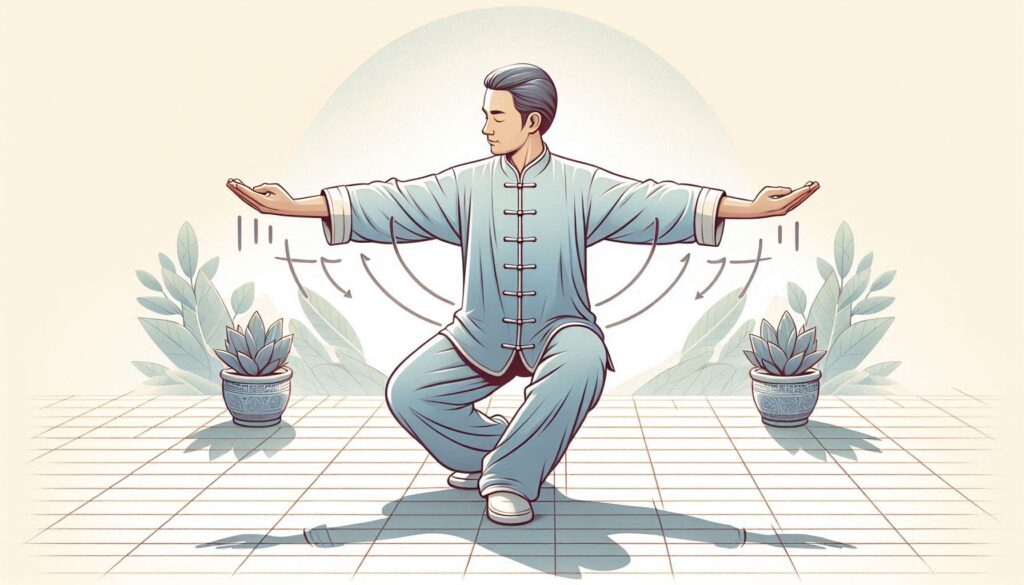
Starting Position: Stand comfortably with your feet slightly apart. Relax your shoulders and take a moment to breathe.
Slow Opening: Gradually raise your arms to shoulder height, palms facing each other. This helps you feel grounded.
Pressing Hands: Extend your arms forward gently, as if you’re pushing against a soft resistance.
Reeling in Silk: Move your hands in a circular motion, pulling back as if you’re reeling in silk threads. It’s a beautiful, flowing motion.Concluding Movement: Bring your arms down smoothly, releasing any lingering tension in your body.
Basic Routine of Sun Style:
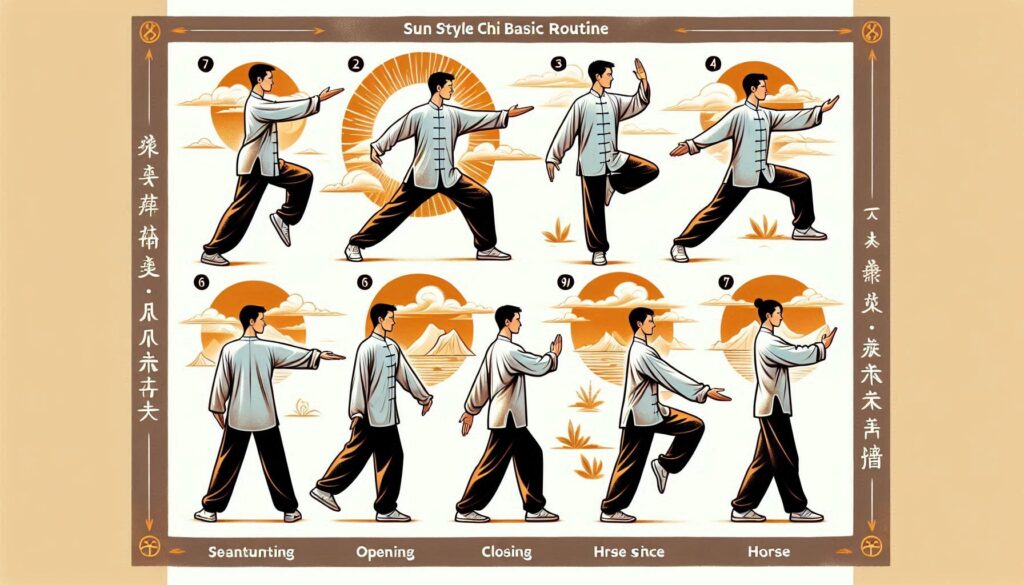
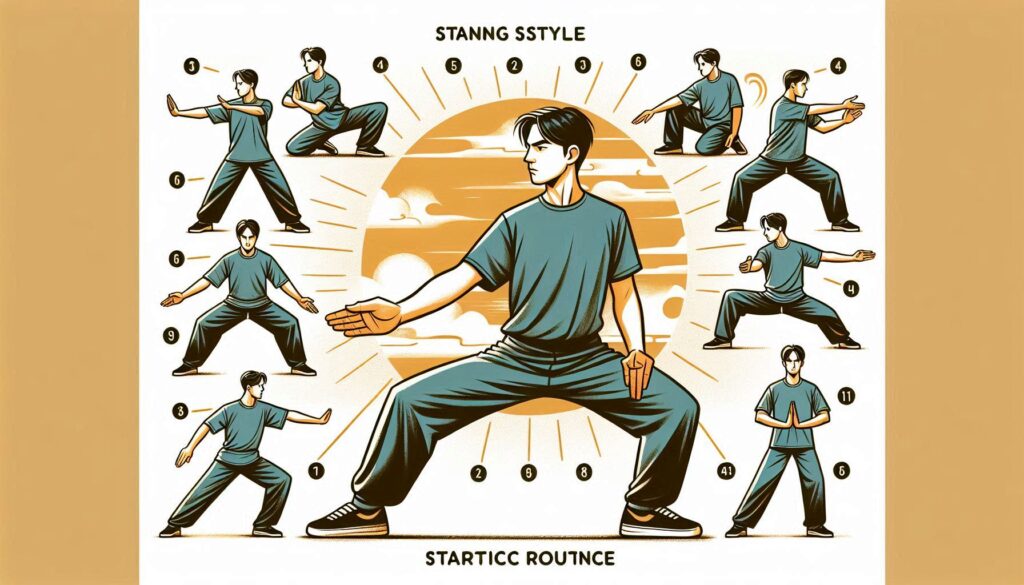
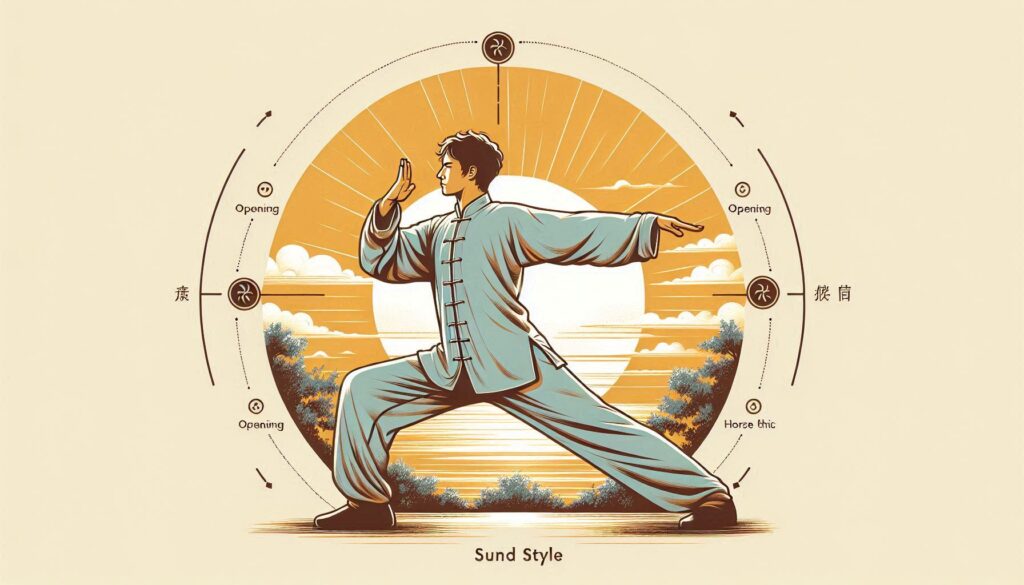
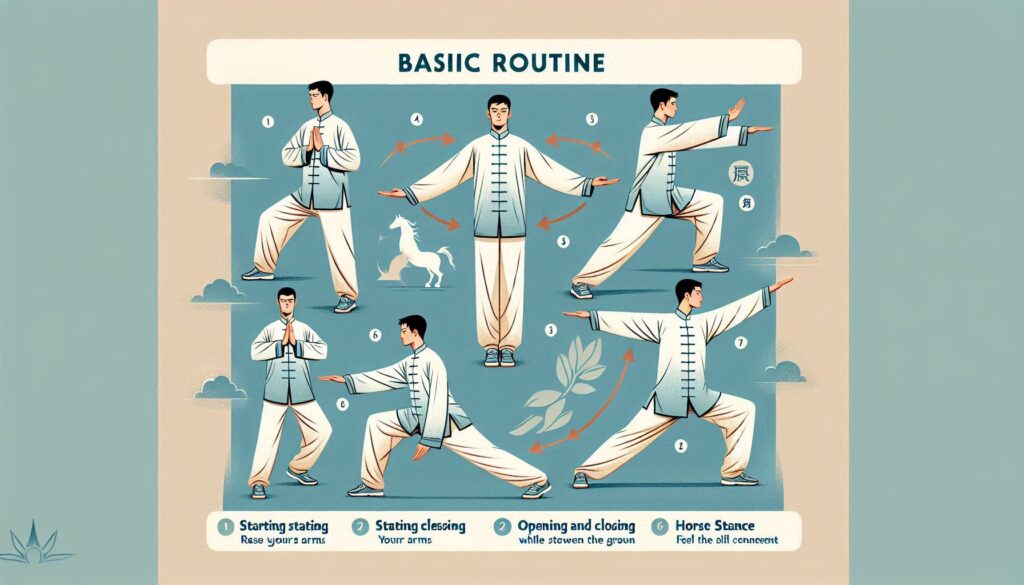
Starting Position: Stand with your feet close together and take a few deep breaths to center yourself.
Opening and Closing: Raise your arms while stepping forward with one foot. Feel the connection between your body and the ground as you move.
Horse Stance: Widen your stance and bend your knees slightly, extending your arms to the sides as you sink into the movement.
Step and Turn: Take a sideways step while turning your torso, creating a smooth, fluid motion.End with Stillness: Return to the starting position, pausing to appreciate how your body feels after the movements.
Basic Routine of Hao Style:
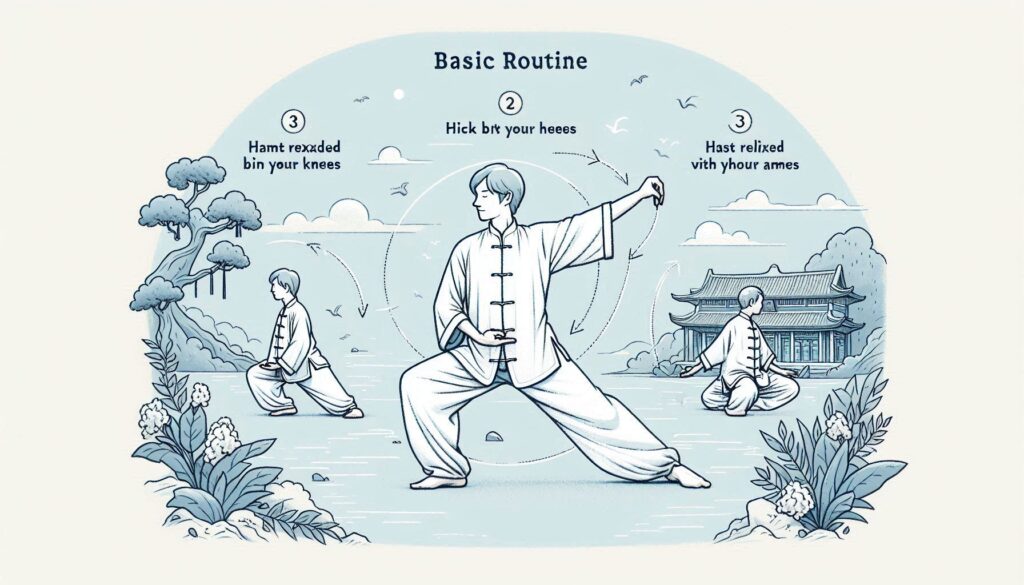
Start Position: Stand relaxed with a slight bend in your knees and arms by your sides.
Ball of Energy: Form a small circle with your hands in front of your abdomen, imagining a ball of energy growing.
Stepping Forward: Shift your weight onto one leg while stepping forward, maintaining your circle of energy.
Turning Movements: Rotate your upper body gently, letting your hands guide your movements. Feel the harmony between your body and the ground beneath you.Closing Sequence: Bring your hands back to the starting position and take a moment to breathe and reflect on your practice.
Important Notes
Warm-Up: Always begin with a gentle warm-up to prepare your body and avoid injury.
Breathing: Focus on deep, slow breaths throughout your practice. This enhances relaxation and mindfulness.
Practice Regularly: Consistency is key! Aim to practice a few times a week to really feel the benefits.
Consult a Professional: If possible, attend classes or watch instructional videos to ensure you’re performing the movements correctly. Learning from others can make a big difference.
Tai Chi is a beautiful way to improve your physical and mental well-being. Enjoy the process of learning, and let each movement bring you a sense of peace and harmony. Happy practicing!
Tai Chi Centers in the U.S.
While practicing at home is convenient, joining a Tai Chi center can offer valuable guidance from experienced instructors. Below are a few well-known centers across the U.S.:
- USA Tai Chi Academy – New York, NY: Offering beginners and advanced practitioner’s classes.
- American Tai Chi and Qigong Association – Houston, TX: Known for offering in-person and virtual classes.
- Tai Chi Wellness Center – San Francisco, CA: Specializes in Tai Chi for health and well-being.
Tai Chi for at home is a wonderful way to enhance physical and mental well-being. By practicing regularly, focusing on mindful movement, and maintaining consistency, you’ll experience the full range of Tai Chi health benefits, including improved balance, flexibility, and reduced stress. Whether practicing in the comfort of your home or at a Tai Chi center, this ancient art form offers an invaluable pathway to wellness.
Citations:
- Li JX, Hong Y, Chan KM Tai chi: physiological characteristics and beneficial effects on health British Journal of Sports Medicine 2001;35:148-156.
- Liu, Hao PhD, PT1; Frank, Adam PhD2. Tai Chi as a Balance Improvement Exercise for Older Adults: A Systematic Review. Journal of Geriatric Physical Therapy 33(3):p 103-109, July/September 2010. DOI:10.1097/JPT.0b013e3181eda1c4.
- Wang C, Collet JP, Lau J. The Effect of Tai Chi on Health Outcomes in Patients With Chronic Conditions: A Systematic Review. Arch Intern Med. 2004;164(5):493–501. doi:10.1001/archinte.164.5.493